
Kentucky Bass on Table Rock Lake
By Captain Keith Greenough • Updated April 18, 2026
Book Your Trip
The Most Reliable Bass on Table Rock
If I had to pick one species that saves slow days on Table Rock Lake, it is the Kentucky spotted bass. Locally we just call them spots. They feed aggressively, they school, and they live in predictable places. When largemouth get moody and smallmouth go deep, the spots keep biting. After twenty years of guiding I can count on Kentucky bass more than anything else in the lake.
Here is everything I teach customers about how to catch them, where they live, and when they peak.
What a Kentucky Bass Is
The Kentucky spotted bass, sometimes called the northern spotted bass, looks like a cross between a largemouth and a smallmouth. It is a member of the black bass family with a distinctive rough tongue patch and horizontal rows of spots along the lower sides.
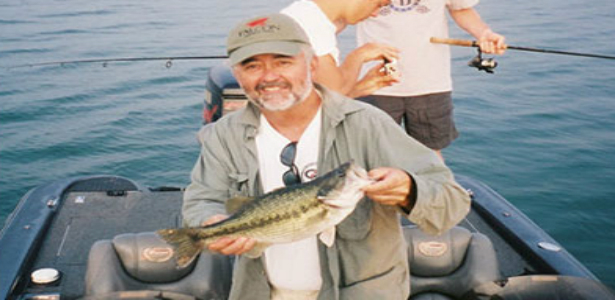
They do not grow as big as largemouth. A three pound spot on Table Rock is a very good fish. A four pound spot is a trophy. What they lack in size they make up for in numbers and aggression. It is not unusual to catch thirty to fifty spots in a productive morning.
Where Spots Live on Table Rock
Kentucky bass love structure. Main lake points, offshore humps, creek channel swings, and bluff ends all hold them. They do not get as shallow as largemouth during the spawn and they do not roam the flats. Find rock and depth change and you will usually find spots.
In clear water like Table Rock, spots school heavily. When you hook one, slow down and work the area. There are almost always more.
The middle of the lake from the Kimberling City area down through Big Indian Creek, Long Creek, and out toward Table Rock Dam is spot country. I will not give you specific waypoints because that is how Keith stays in business. On a guided trip I put you right on them.
Seasonal Patterns
Winter (December to February): Spots stack on deep structure in 30 to 60 feet of water. Vertical jigging a spoon through a school on electronics is one of the best ways to catch a pile of cold water bass. See our winter fishing guide for more detail.
Pre spawn and spawn (March to May): Spots stage on points and spawn later than largemouth. Late April through mid May is when I catch the most numbers. Jigs, shaky heads, and small swimbaits on chunk rock banks are hard to beat.
Summer (June to August): Spots move to offshore structure in 20 to 40 feet. Drop shots, jigging spoons, and deep swimbaits win. Topwater also happens on main lake points at dawn when shad are schooling.
Fall (September to November): The peak season. Shad migration pulls spots into creek arms where they school and bust bait on top. Walking baits and small swimbaits produce surface strikes that will make your week.
Lures Keith Uses
Drop shot rigs with four inch finesse worms. The single most productive spot rig all year.
Half ounce jigging spoons in silver or white. Deadly when you mark a school on electronics.
Small swimbaits on light jigheads. Throw on main lake points year round.
Shaky heads with finesse worms. Great for working rock at 15 to 25 feet.
Walking topwater baits like a Zara Super Spook Jr in the fall over schooling fish. Explosive strikes.
I run Lew's reels and rods and I keep rods rigged for drop shot, jigging spoon, and topwater ready on the deck at all times.
Tackle Setup
Spinning rods in 6 foot 10 inch medium light for drop shots and finesse presentations. Six pound fluorocarbon line.
Medium action spinning for swimbaits and light jigheads. Eight pound fluorocarbon.
Medium heavy casting for jigging spoons. Ten to twelve pound fluorocarbon.
Topwater on medium action casting with fifteen pound monofilament for stretch on strikes.
Why Guided Trips Matter for Spots
Finding schools of Kentucky bass on Table Rock is an electronics game. Side imaging, down imaging, and live sonar let me pinpoint fish. Without the right boat and hours of on water practice, visitors spend most of a trip driving around hoping to find structure that holds fish. On a guided trip I skip straight to the good water and you get straight to fishing.
Also, Keith gives you a rod rigged the right way. First time spot fishermen often lose fish by using too heavy a line or the wrong hook. A guided trip removes that friction.
When to Book
April, May, October, and November are my favorite months for Kentucky bass. Book two to four weeks ahead for those windows. Call (417) 693-0298 or use the contact form.
Winter spot fishing is a trophy opportunity that very few people take advantage of. If you can handle cold mornings, December through February produces some of the best concentrations of spots all year.
Frequently Asked Questions
Are Kentucky bass the same as spotted bass?
On Table Rock Lake, locally we use the names interchangeably. Kentucky bass and northern spotted bass are the same species in local conversation.
What is the biggest Kentucky bass on Table Rock Lake?
Four pound spots are rare and genuine trophies. Three pound spots are good fish. A typical productive day will produce plenty of spots in the one to two pound range with a few bigger mixed in.
Can you catch Kentucky bass year round?
Yes. They are active year round. Fall and late spring are peak. Winter is the trophy window. Summer produces best at dawn and on deep offshore structure.
Do I need my own tackle for Kentucky bass?
No. Keith provides every rod and every lure on his guided trips. Just show up with a license and a hat.
Ready to Book Your Trip?
A $75 refundable deposit holds your date. Cash or Venmo accepted.
(417) 693-0298 Book Your Trip